How to Fill Raised Garden Beds Using the Lasagna Method (Step-by-Step Guide)
Learn how to fill raised garden beds using the Lasagna Method. Build healthy soil with cardboard, coco coir, compost, and layered organic matter.
RAISED BED GARDENINGSOIL HEALTH & COVER CROPS
3/3/20264 min read
When I first started gardening, I assumed filling a raised bed was simple: buy soil, pour it in, plant vegetables.
But over time, I realized something important — soil health isn’t about filling a box with dirt. It’s about building a living ecosystem.
One book that completely shifted my understanding was Raised-Bed Gardening for Beginners: Your Guide to Growing Sustainability and Self-Sufficiency by Tammy Wylie. In it, she outlines the Lasagna Method for filling raised beds — a layered approach that mimics how nature builds soil on the forest floor.
That method changed how I fill my beds, and years later, my soil continues to improve instead of degrade.
Here’s what the Lasagna Method is, the science behind it, and exactly how I used it — including adding cardboard and coco coir for structure and sustainability.
What Is the Lasagna Method?
The Lasagna Method (also called layered gardening) involves stacking alternating layers of organic material — much like building a lasagna.
Instead of filling a raised bed entirely with purchased soil, you create layers of:
Carbon-rich materials (“browns”)
Nitrogen-rich materials (“greens”)
Structural elements for airflow
A quality planting layer on top
This layered system encourages gradual decomposition, feeding soil life over time and improving structure season after season.
Tammy Wylie emphasizes that soil is alive — made up of microorganisms, fungi, bacteria, organic matter, mineral particles, air, and water. The Lasagna Method supports all of those components rather than disrupting them.
The Science Behind Layered Soil
Healthy soil relies on three critical factors:
1. Organic Matter
As organic material decomposes, it:
Releases nutrients slowly
Improves water retention
Enhances soil aggregation
Supports beneficial microbes
Organic matter increases cation exchange capacity (CEC), meaning soil can hold and exchange nutrients more effectively.
2. Carbon-to-Nitrogen Balance
Microorganisms require a balance of carbon (energy source) and nitrogen (growth fuel). Too much nitrogen creates odor and compaction; too much carbon slows decomposition.
Layering greens and browns keeps this balance stable.
3. Airflow & Drainage
Soil must contain pore space. Compacted soil suffocates roots and microbes. Layered organic material naturally creates air pockets.
The key to the Lasagna Method isn’t the exact ingredients — it’s maintaining balance between carbon-rich and nitrogen-rich materials while supporting airflow, drainage, and microbial activity.
That balance is what builds living soil.
How I Filled My Raised Beds
(Step by Step)
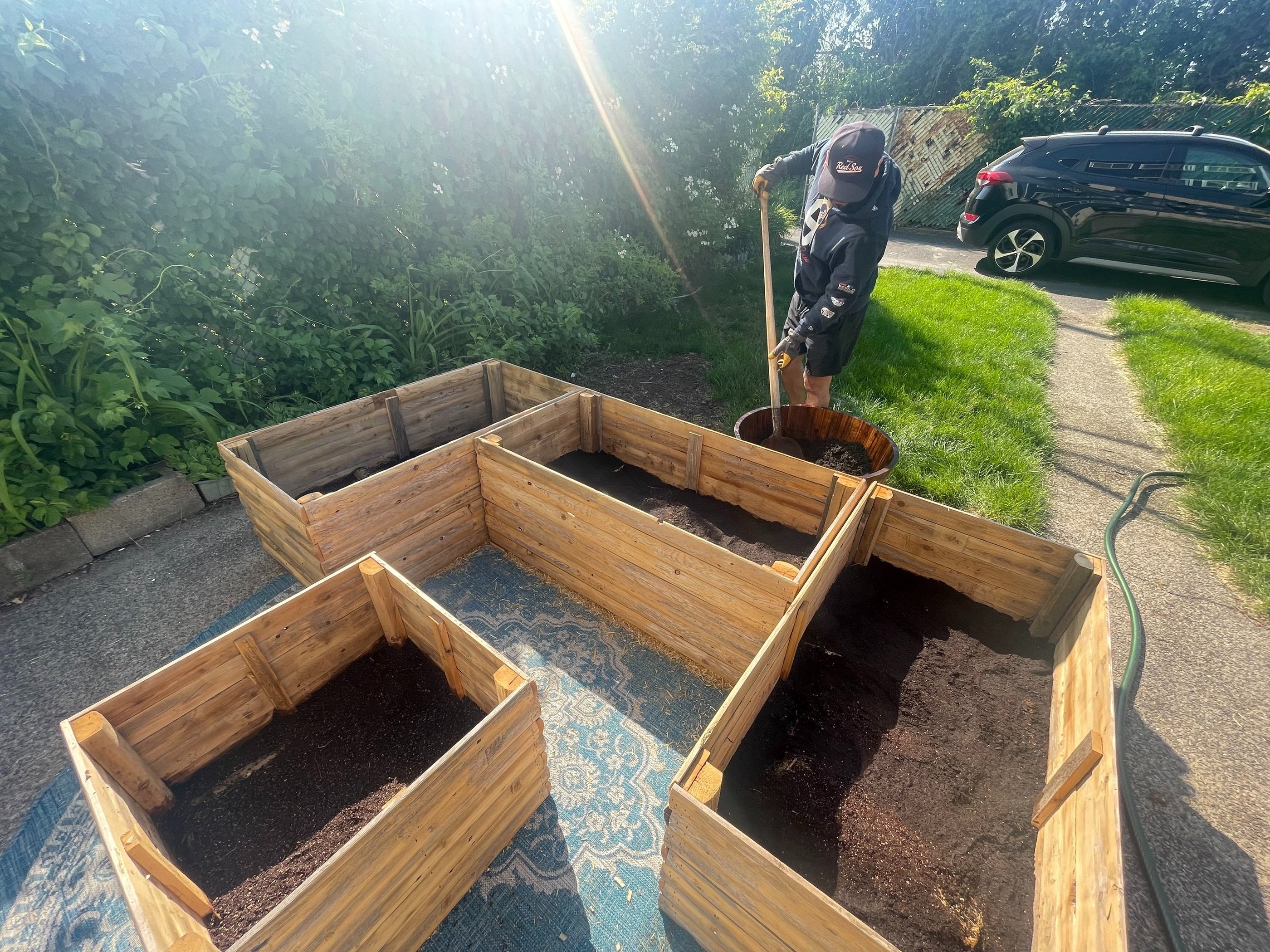
Here’s how I applied the Lasagna Method in my own raised beds.
Step 1: Cardboard Base Layer
Before adding anything else, I laid plain, untreated cardboard directly on the ground. Save your delivery boxes and put them to use in your garden!
Why cardboard?
Suppresses weeds naturally
Adds a carbon-rich layer
Encourages earthworm activity
Breaks down completely over time
Cardboard acts as both a weed barrier and a decomposing carbon source, integrating into the soil ecosystem within months.
Step 2: Coarse Woody Layer
On top of the cardboard, I added:
Twigs
Small branches
Yard trimmings
This coarse layer:
Prevents compaction
Creates airflow
Supports fungal colonization
Slowly decomposes over multiple seasons
Think of this as the structural backbone of the bed.
Step 3: Nitrogen-Rich Green Layer
Next came green material:
Grass clippings
Soft plant trimmings
Aged kitchen scraps
This nitrogen layer fuels bacterial growth, accelerating the breakdown of carbon-heavy materials below.
Microbial activity increases rapidly when nitrogen is available — which jumpstarts the soil-building process.
Step 4: Carbon-Rich Brown Layer
Then I layered:
Shredded leaves
Straw
Additional cardboard pieces if needed
This balances the nitrogen layer and improves long-term soil structure.
Carbon helps stabilize decomposition and prevents anaerobic conditions.
Step 5: Structural & Moisture Support (Coco Coir + Sand)
Before adding my final planting mix, I incorporated:
Coco Coir
Coco coir improves:
Moisture retention
Aeration
Root penetration
Texture consistency
It’s also a renewable alternative to peat moss, aligning with sustainable gardening principles!
Because raised beds can dry out more quickly than in-ground gardens, coco coir helps regulate hydration without creating water logging.
My go-to coco coir soil medium is Coco Loco by FoxFarm! Mixed with excellent beneficial nutrients like bat guano, dolomite lime, & worm castings. Its light and fluffy texture aids in excellent aeration and root development yet retaining appropriate moisture.
Sand (Used Sparingly)
A modest amount of coarse sand can:
Improve drainage
Reduce compaction
Increase structural stability
Important: Sand should never dominate the mix. Too much can create dense soil. In this method, it serves as a minor texture enhancer — not a main component.
Step 6: Final Planting Layer
Finally, I topped everything with:
Finished compost
High-quality organic raised bed soil mix
Optional worm castings
This is where plant roots establish first, so quality matters most here. Coast of Maine has consistently produced reliable soil in my experience and are typically my go-to soil company. Their products are organic and they use many of the same soil additives I use in my seed starting medium for soil blocking such as mycorrhizae and worm castings. They even have lobster and crab shell meal as part of their high quality, organic ingredients!
As the layers below decompose, they continuously feed this top layer.
Why This Method Is Sustainable
This approach supports environmental health in several ways:
Diverts yard waste into productive soil
Reduces reliance on bagged soil
Builds long-term fertility naturally
Supports biodiversity underground
Improves water retention and reduces runoff
Rather than replacing soil every season, I now simply top-dress with compost annually. The foundation does the work!
Since filling my beds using this method:
Soil structure improves each year
Earthworms are abundant
Water retention is noticeably better
Plants root deeply and grow vigorously
I rarely need synthetic inputs
The soil has become softer, richer, and more biologically active over time.
It feels alive!
Why This Book Changed My Approach
Raised-Bed Gardening for Beginners by Tammy Wylie reframed how I think about soil. It emphasizes sustainability, self-sufficiency, and long-term soil stewardship — not quick fixes.
If you’re interested in building raised beds that improve year after year, I highly recommend reading it.
Final Thoughts: Building Soil as an Ecosystem
Raised beds aren’t just containers. They’re ecosystems.
When filled intentionally — with layered organic material, structural support, moisture-balancing elements, and quality topsoil — they become regenerative systems that improve with time.
The Lasagna Method isn’t about perfection. It’s about balance.
And when soil is balanced, your garden thrives.
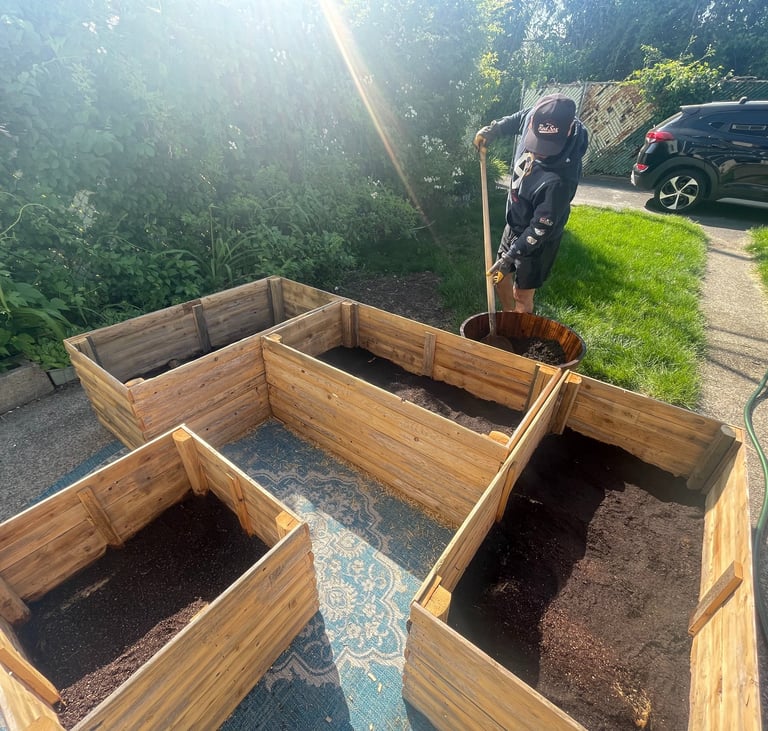
My husband helping to fill our raised beds with the lasagna method!