Essential Seed Starting Supplies for Small Space Gardeners
Essential seed starting supplies for small space gardeners. Grow lights, soil blockers, heat mats, and tools for indoor seed starting success.
SMALL SPACE GARDENINGSEED STARTING
3/2/20264 min read
Starting seeds indoors doesn’t require a full greenhouse setup — especially if you’re gardening in a small backyard, apartment, or urban space. With a focused, efficient system, you can grow strong seedlings without cluttering your home.
Over time, I’ve refined my seed starting setup down to the core supplies that truly matter. This isn’t a list of every possible gadget — just the essentials that create healthy seedlings in a compact indoor space.
If you’re looking for a simple, uncomplicated way to start seeds indoors, here’s what I recommend!
What You Actually Need (And What You Don’t)
There are endless seed starting tools on the market, but most small-space gardeners only need a few foundational items:
Reliable light
A quality growing medium
Containers or blocks
Consistent moisture
Basic pest prevention
Everything else is optional.
Keeping your setup minimal makes it easier to manage, easier to store, and easier to scale as your garden grows.
1. A Reliable Grow Light (The Non-Negotiable)
If there’s one thing you shouldn’t skip, it’s adequate lighting.
Without enough light, seedlings quickly become leggy, weak, and prone to falling over. For small-space gardeners, compact LED grow lights are often the most practical solution.
Look for a grow light that:
Provides full-spectrum output
Can be adjusted in height
Fits shelving units or narrow tables
Doesn’t overheat small areas
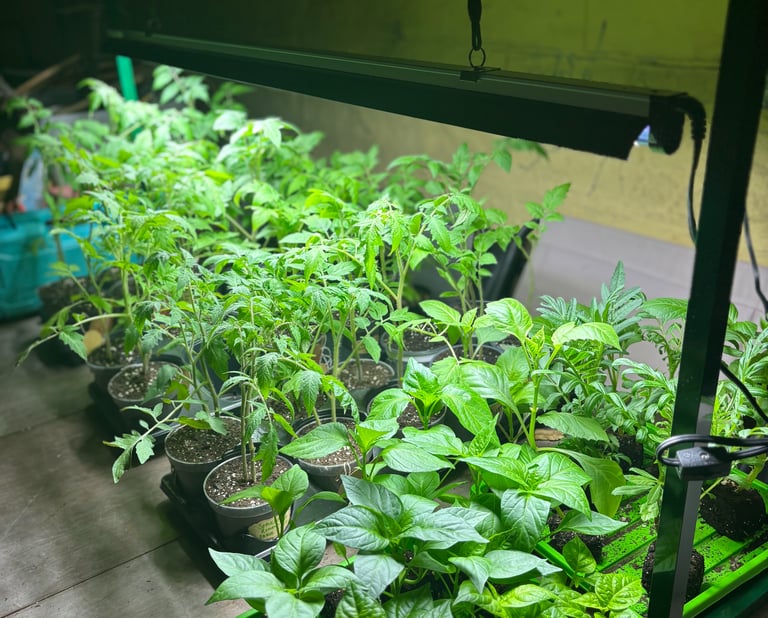
A simple shelf-and-light system can support herbs, vegetables, and flowers without taking up much room.
I’ve personally used a compact full-spectrum grow light from Ferry-Morse since I started gardening. It’s adjustable, easy to move, and doesn’t feel overly complicated or expensive — which is ideal if you’re building a smaller & more practical indoor setup without going overboard.
2. Soil Blocker or Seed Cell Trays with Humidity Dome
For a small indoor seed starting setup, you have two practical options:
A compact soil blocker
ORSeed cell trays with a bottom tray and humidity dome
If you prefer a traditional tray system, look for:
Reusable seed cell trays (avoid thin, single-use plastic)
A sturdy bottom tray to catch water
A clear humidity dome to maintain moisture during germination
Seed cell trays with domes are especially helpful for beginners because they simplify moisture control and keep seeds consistently humid during early sprouting. Once seedlings emerge, the dome can be removed to improve airflow and reduce mold risk.
Bootstrap Farmer has a great seed starter kit with cells, trays, and humidity domes included-- they are reusable and there are multiple color and size options to choose from!
If you’re interested in soil blocking instead, I walk through that method step-by-step in my soil blocking guide here:
"Why I Switched to the Soil Block Method for Seed Starting"
Both methods work well — the best choice depends on your space, comfort level, and how simplified you want your system to be.
3. Fine Seed Starting Mix
A light, well-draining seed starting mix is essential for strong germination.
Unlike garden soil, seed starting mix:
Retains moisture without compacting
Encourages healthy root growth
Reduces fungal issues
For soil blocking, a fine-textured mix works best.
If you’d prefer a ready-to-use option instead of blending your own, Coast of Maine has consistently produced reliable seed starting mixes in my experience and are typically my go-to soil company. Their products are organic and they use many of the same soil additives I use in my seed starting medium for soil blocking such as mycorrhizae and worm castings. They even have lobster and crab shell meal as part of their high quality, organic ingredients!
4. Heat Mat (Optional but Helpful)
In cooler homes, a seed starting heat mat can significantly improve germination rates for tomatoes, peppers, and other warm-season crops. For small-space setups, choose a compact mat sized to your trays rather than oversized versions. You may not need one for every crop, but for early-season vegetables, it can make a noticeable difference.
5. Sticky Traps for Fungus Gnats
Indoor seed starting can attract fungus gnats, especially in moist soil conditions. Yellow sticky traps are an inexpensive, low-effort solution for monitoring and reducing gnat populations before they become overwhelming. They’re small, easy to place, and particularly helpful in compact indoor setups.
6. A Simple Mixing Container
You don’t need a complicated mixing station to prepare seed starting soil. A sturdy bucket or container large enough to thoroughly mix moist soil is more than enough.
Look for something:
Durable
Easy to rinse
Easy to store
Small-space gardening works best when tools are multi-purpose and easy to tuck away between seasons. I have personally found this BPA-free, collapsible bucket super handy for mixing soil and also easy to clean. I'll often use it to collect rain water for the garden!
Simple Starter Setup (Quick Reference)
If you want the most uncomplicated way to start seeds indoors in a small space, here’s a practical starter setup:
Basic Setup (Most Beginners)
1 Adjustable LED Grow Light
1 Seed Cell Tray with Bottom Tray & Humidity Dome
1 Bag of Seed Starting Mix
1 Small Heat Mat (optional but helpful)
1 Pack of Sticky Traps
This setup fits easily on a shelf or small table and covers everything you need for strong seedlings without unnecessary extras.
Keep It Minimal
The biggest mistake beginners make is overbuying.
For small-space seed starting, you really only need:
Light
Growing medium
Containers or blocks
Moisture control
Basic pest management
Everything else is optional.
A streamlined seed starting setup not only saves space — it makes gardening more manageable and enjoyable. Start simple. Expand only if you truly need to.
Happy Gardening!