Indoor Herb Garden from Seed: Easy Step-by-Step Guide for Beginners
Start an indoor herb garden from seed with this beginner-friendly guide. Learn the best pots, soil, grow lights, watering methods, and pruning tips for basil, thyme, oregano, parsley, and dill.
Abigail Blair
2/19/20265 min read
🌿 Starting an Indoor Herb Garden from Seed: A Simple, Sustainable Guide
Starting an indoor herb garden from seed is one of the most rewarding ways to grow fresh flavor at home. Whether you’re gardening through winter or simply want herbs within reach year-round, growing herbs indoors gives you control over soil quality, light, and growth conditions.
If you’re new to seed starting or just want a simple, reliable system, this guide walks through exactly how to start herbs indoors — from choosing pots and soil to germination, pruning, fertilizing, and long-term care. If you’re working with limited space like I am, these urban gardening tips for beginners can help you make the most of every windowsill and corner.
Starting herbs from seed indoors might seem intimidating, but once you understand the basics — proper drainage, quality soil, consistent light, and gentle watering — it becomes one of the most rewarding gardening projects you can do year-round.
🌱 Tools You Need to Start an Indoor Herb Garden from Seed
If you’re gathering supplies, I’ve linked the exact products I personally use in my indoor herb garden setup. Quality tools truly make seed starting easier and more successful.
🪴 1. Pots with Proper Drainage
The most important feature of any herb pot is drainage holes. Indoor herbs hate sitting in soggy soil. Without drainage, roots rot quickly. These are the exact pots I used for my indoor herb garden because they have proper drainage holes and the perfect size for root development. If you're starting from seed, I highly recommend using something similar!
Look for:
4–6 inch pots for single herbs
Drainage hole at the bottom
A matching saucer to catch excess water
🌿 2. The Right Soil for Indoor Herbs
Using the correct potting soil dramatically improves germination and long-term health.
Herbs prefer:
Well-draining soil
Light texture
Moderate nutrients
Not heavy garden soil
Here are soil recommendations by brand and herb type:
🌱 FoxFarm Ocean Forest Potting Soil
Great all-purpose, nutrient-rich soil for:
Basil
Parsley
Dill
🌱 Coast of Maine Organic Potting Soil
Excellent for Mediterranean herbs that prefer lighter feeding:
Thyme
Oregano
Should You Add Soil Amendments?
For indoor herbs, keep it simple:
✔️ A small handful of worm castings mixed into soil can boost early growth.
✔️ Avoid heavy compost indoors (can attract fungus gnats).
✔️ Slow-release fertilizer is optional — not required if using quality soil.
If you prefer a more sustainable and space-efficient approach, I also share how I use soil blocking for seed starting in my blog post specifically about the process, steps, and tools to soil blocking for seed starting.
✂️ 3. Pruning Shears
Once herbs begin growing, regular pruning keeps them full and productive.
Sharp pruning shears prevent tearing delicate stems.
💡 4. Grow Lights (Essential for Strong Germination)
Herbs require strong light, especially when starting from seed indoors.
Without enough light:
Seedlings stretch
Stems become weak
Growth slows
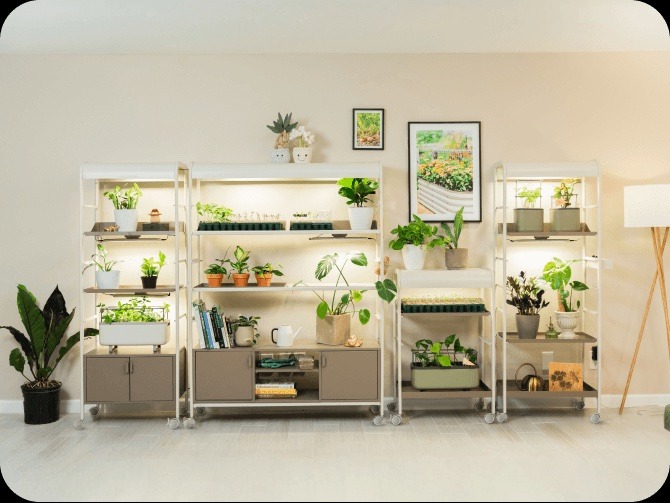
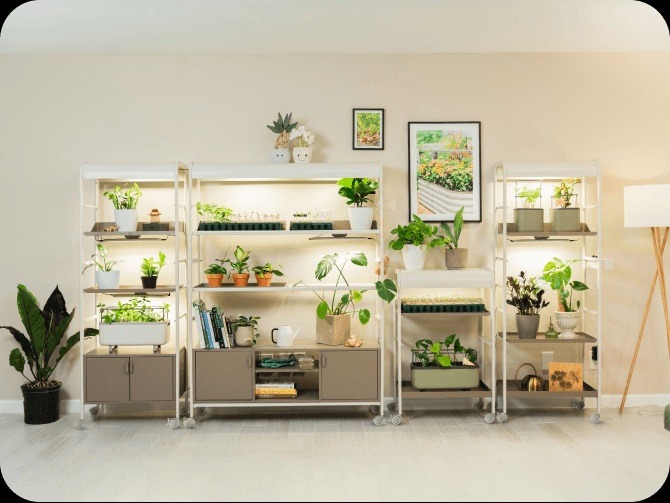
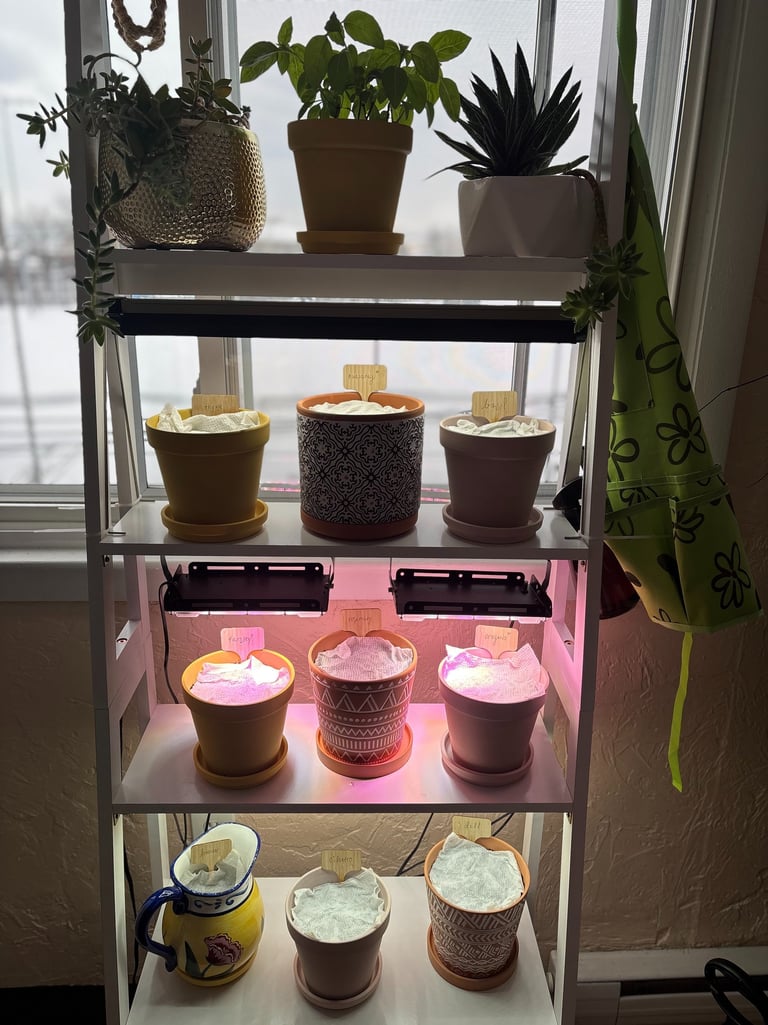
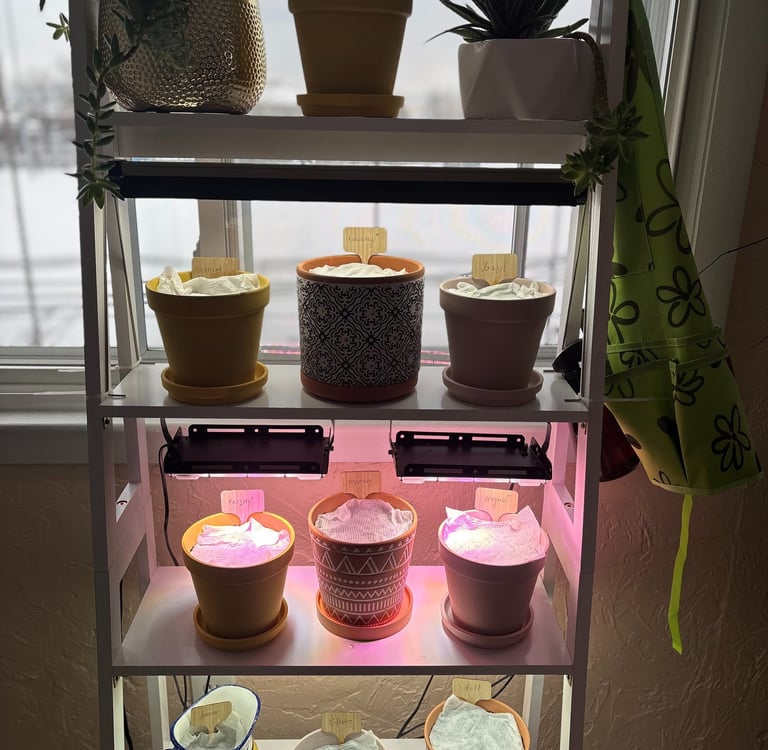
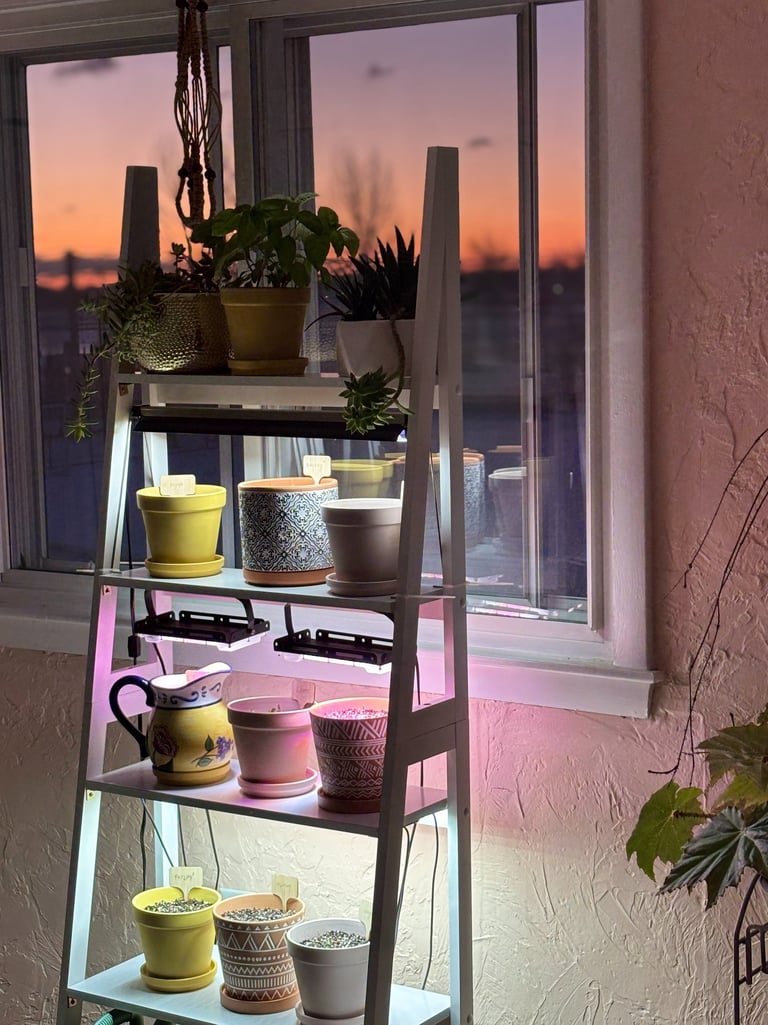
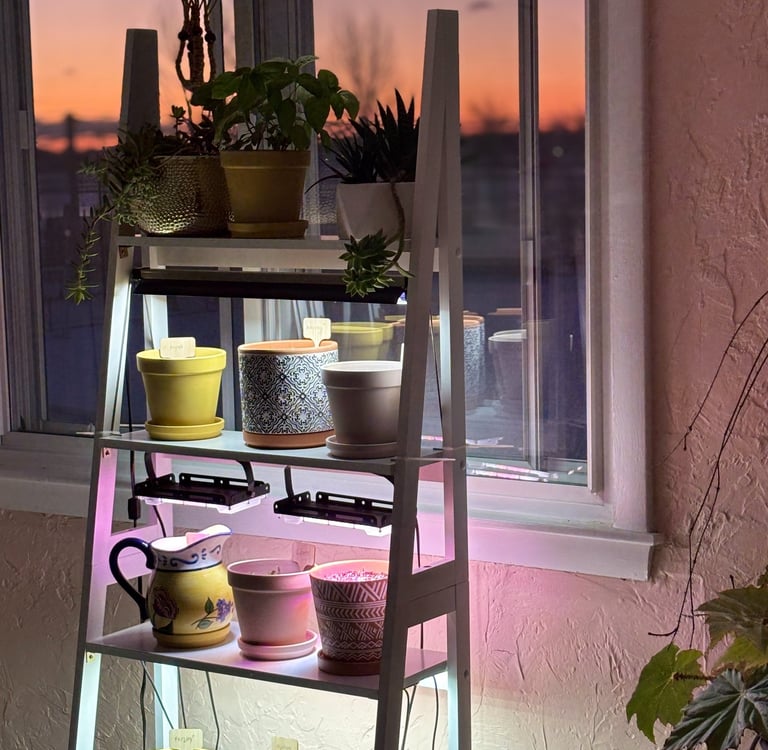
I built a simple grow light shelving unit for germinating herbs and summer vegetable seedlings shown above at the start of the page. It works well for starting seeds and short-term growth but I wish this light system from Vego Garden existed before I made my own! If you plan to grow from seed regularly — especially vegetables and herbs year-round — investing in a system like the Vego Garden Grow Light Series can simplify the entire process. It’s designed specifically for seed starting and controlled indoor growing, making it a long-term solution rather than a temporary setup. Highly recommend!
🌞 Vego Garden Grow Light Garden Series (F4S Pro)
The Vego Grow Light Garden Series is a thoughtfully designed indoor grow light system built specifically for seed starting and plant growth.
What makes it stand out:
Full-spectrum LED lighting
Adjustable height system
Strong metal shelving
Designed for consistent, even light coverage
Ideal for herbs, microgreens, seedlings, and houseplants
There are four models available:
F4S Pro (4 shelves)
Smaller compact options
Larger multi-tier options
Upgraded models with enhanced output
It’s a long-term investment for anyone who plans to grow from seed season after season.
Not necessary to start — but incredibly impressive if you’re committed to year-round growing!
🌿 How to Start Herbs from Seed Indoors (Simple Germination Steps)
Before diving into each herb, here’s the universal seed-starting method I use:
Fill pot with lightly moistened soil.
Sow seeds according to packet depth (usually very shallow).
Mist soil gently — do not soak.
Cover loosely with a damp paper towel during germination.
Place under grow lights immediately.
Remove paper towel once sprouts appear.
Keep soil lightly moist — never waterlogged. Misting works beautifully during germination to prevent disturbing tiny seeds!
To stay organized with watering schedules and planting dates, I personally use my favorite garden planning app to keep everything on track.
Indoor Herb Seed Starting Guide (Quick Reference Chart)
🌿 Basil
Germination: 5–10 days
Soil: FoxFarm Ocean Forest
Additive: Small amount worm castings optional
Water: Keep consistently moist during germination
Light: 12–16 hrs grow light; thrives in south-facing window
Pruning: Pinch top leaves once 6 inches tall
🌿 Thyme
Germination: 10–14 days
Soil: Coast of Maine (lighter, well-draining)
Additive: No heavy compost
Water: Allow soil to dry slightly between watering
Light: Full sun preferred
Pruning: Trim lightly to encourage bushy growth
🌿 Oregano
Germination: 7–14 days
Soil: Coast of Maine
Water: Moderate; avoid soggy soil
Light: Strong light essential
Pruning: Regular trimming improves flavor intensity
🌿 Parsley
Germination: 14–21 days (slow starter)
Tip: Soak seeds overnight before planting
Soil: FoxFarm Ocean Forest
Water: Keep evenly moist
Light: Bright indirect to full sun
Pruning: Harvest outer stems first
🌿 Dill
Germination: 7–14 days
Soil: FoxFarm Ocean Forest
Water: Moderate moisture
Light: Full sun required
Pruning: Minimal; harvest leaves gently
🌿 A Personal Touch: Growing Huacatay (Peruvian Mint)
I also grew Huacatay for my mother-in-law, as it’s a beloved herb in Peruvian cuisine. Starting it from seed indoors felt meaningful — growing something connected to family and culture makes an herb garden even more special.
I source many of my herb seeds from SeedsNow because they offer organic varieties in smaller packet sizes that work well for indoor gardens. And since healthy herbs start with healthy soil, I also focus on improving my raised beds with cover crops in the off-season to naturally build nutrients for the next planting cycle.
🌞 After Germination: Light & Placement
Once seedlings are established:
• Keep grow lights 2–3 inches above plants
• Run lights 12–16 hours daily
• After strong growth, transition to a south-facing window if available
I’m lucky to have a sunroom with a south-facing window. My husband and I built wooden shelves where my herbs now live, allowing my grow light shelf to focus on summer garden seedlings! Get creative! Herbs love light!
🌿 Fertilizing Indoor Herbs
After 4–6 weeks:
Use diluted liquid fertilizer every 2–3 weeks.
I use:
Mix at half strength for herbs & avoid overfeeding — too much fertilizer reduces flavor intensity!
🐞 Managing Indoor Pests
Even indoor herb gardens can attract:
• Fungus gnats
• Fruit flies
To prevent this, avoid overwatering, keep adequate airflow, and soil surface dry! I use these items below and have had great success keeping fruit flies under control!
🌿 Simple Tips for Healthy Herb Growth
• Prune regularly for fullness
• Rotate pots weekly for even growth
• Never let herbs sit in standing water
• Harvest often — it encourages more growth
• Replace soil annually if keeping long-term
🌿 Why I Started an Indoor Herb Garden
For me, starting an indoor herb garden from seed wasn’t just about fresh basil or dill. There’s something grounding about tending to seedlings, even when snow is outside. And having herbs at arm’s reach while cooking is both beautiful and practical. These herbs — basil, thyme, oregano, parsley, dill — are staples in my kitchen! But your list might be different!
Maybe you are interested in...
Lavender for tea
Mint for cocktails
Rosemary for roasting
Lemon balm for aromatherapy
Cilantro for salsa
Growing herbs opens creative doors:
Drying and storing
Making teas
Infused oils
Herbal blends
Natural fragrance
If you love cooking with fresh herbs as much as I do, growing them indoors from seed is such a satisfying way to bring life into your home — especially during winter. Start with the herbs you use most, keep it simple, and let your indoor garden grow with you!